Confidence: Confirmed
Hawart holds the manor
Before the Norman Conquest, Hawart held the manor of Stokesley and 6 carucates of land.
1086 → today
From the Domesday survey to the Group's latest books. Every entry is drawn from the Group's own research or from a cited public source, and each one links to its sources. Each is marked confirmed, likely or tradition / legend, so you always know how sure we are.
Begin with a river, and a handful of households on its north bank. Domesday finds a priest, a mill and a church here, and a value that has fallen by two-thirds since the Conquest. What follows is a story told almost entirely through lords: the Balliols, who would one day give Scotland a king, and then the Eures, who quarrelled with their own mother over the stewards. The town itself is glimpsed only sideways, in a fair granted by Henry III, a claim that the market was older than anyone could remember, and a chantry priest whose living was too poor to keep.
Confidence: Confirmed
Before the Norman Conquest, Hawart held the manor of Stokesley and 6 carucates of land.
Confidence: Confirmed
Domesday records 8 villagers and a priest, 3 ploughlands, 8 acres of meadow, a mill worth 10 shillings and a church. The lord is Uhtred (Uctred, "the king's thegn"); the estate is valued at £8, down from £24 in 1066.
Confidence: Confirmed
Guy de Balliol, who held the barony of Stokesley, gives the parish church and a carucate of land to St Mary's Abbey in York.
Confidence: Confirmed
Henry III grants John son of Robert (John FitzRobert) a yearly fair on the eve and day of St Thomas the Martyr: the origin of Stokesley's traditional fair.
Sources differ. the VCH dates the grant 1224 and calls it a yearly fair; the Town Council gives 1223–4; the CTLHS chronology describes a weekly market.
Confidence: Confirmed
Ada de Balliol enfeoffs her younger sons Robert and Hugh, who take the name Eure. They promptly appoint their own steward and reeves, depose their mother's, and hold courts, only to hand the manor back to her for life a few months later.
Confidence: Confirmed
Hugh de Eure claims that the right to hold a market in Stokesley has existed since the Conquest.
Confidence: Confirmed
The overlordship of Stokesley, held by the Balliol family, is forfeited by John Balliol, sometime king of Scotland.
Confidence: Confirmed
William son of Simon the Smith quitclaims his burgage in Stokesley to Sir John Eure: one of only two recorded instances of burgage tenure in the town.
Confidence: Confirmed
William Stokesley founds a chantry of the Blessed Virgin in the parish church. Its endowment is so small that by 1375 it has stood empty "no small time" for poverty.
Confidence: Confirmed
The Abbot of St Mary's is licensed to grant the advowson of Stokesley to the Dean and Chapter of St Peter's, York.
Confidence: Confirmed
Ralph Eure, lord of Stokesley, is killed at the battle of Towton during the Wars of the Roses.
For two centuries the record thins, and what survives is mostly paperwork: a settlement on a widow, a barony created, the first entries in the parish registers. Then the manor changes hands to Richard Forster, a Catholic who paid for his faith in fines and later kept the purse of an exiled king. The townspeople appear when they are told to mend their bridge. Somewhere in these years, too, a narrow stone arch was thrown across the Leven for men and packhorses. Nobody wrote down when.
Confidence: Confirmed
Ralph Eure settles the manor of Stokesley on his wife Agnes for her lifetime.
Confidence: Confirmed
Sir William Eure, lord of Stokesley, is created Lord Eure. His son Ralph is later killed at Ancram Moor.
Confidence: Confirmed
The surviving registers of baptisms, marriages and burials start in 1571; the volumes up to 1750 have since been printed.
Confidence: Confirmed
William, Lord Eure, sells Stokesley to Richard Forster, a Catholic recusant. Two-thirds of the manor are later seized by the Crown for his unpaid fines.
Confidence: Confirmed
The seized two-thirds are leased back to Richard Forster and his son Henry for 41 years at £5 a year.
Confidence: Likely
The North Riding Quarter Sessions order the inhabitants of Stokesley to repair "Stoxley-becke bridge", probably the old stone footbridge over the Leven.
Sources differ. The VCH says the bridge named was "probably" the old stone footbridge; the identification is not certain.
Confidence: Confirmed
Richard Forster, who kept the accounts of the exiled Charles II, is created a baronet.
Confidence: Confirmed
Two covered cups and a paten are made for the church. One cup is the gift of Sir James Pennyman, the other of the rector Thomas Pennyman.
Confidence: Confirmed
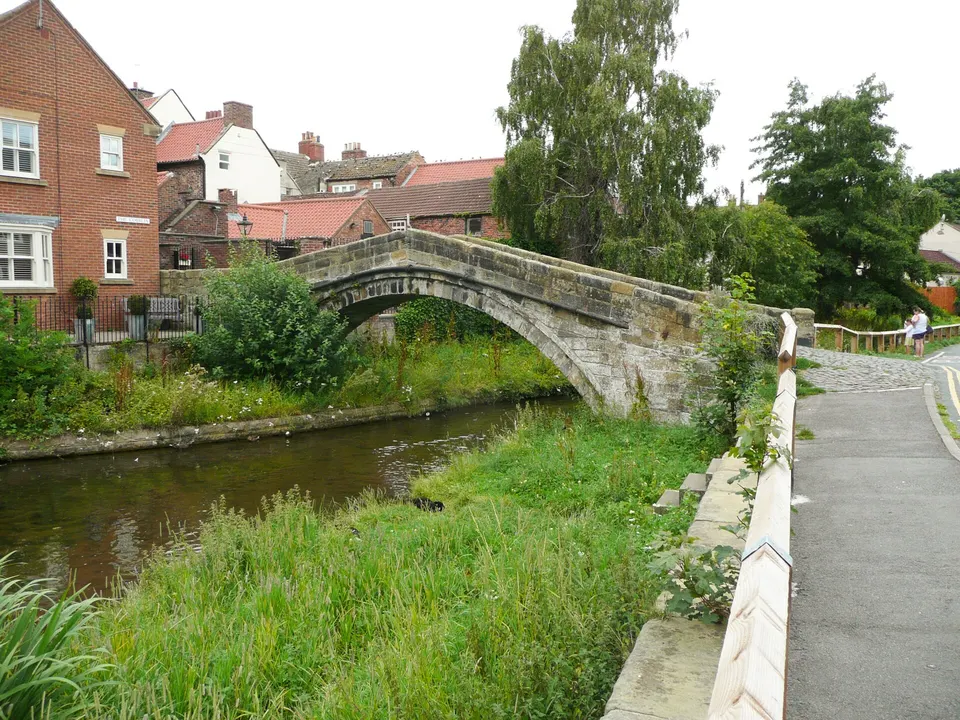
A narrow stone bridge, later listed at Grade II and also known as Taylorson's Bridge, is built over the Leven. Historic England dates it no more precisely than "C17 or early C18".
The Georgian town is busier, louder and better documented. It has a Saturday market, a mill-house holding three water-mills and a horse-mill under one roof, and a crowd of boys who, in 1746, sacked the Catholic chapel of their own lord of the manor. John Wesley rides in and preaches, a new nave goes up on the old church, and a wise man in a red coat sets up shop at the west end, selling cures and second sight. Some of this is history and some of it is legend; the entries say which.
Confidence: Confirmed
A weekly market is held on Saturdays. The mill-house contains "three water corn milnes and one horse milne all within one house".
Confidence: Confirmed
The boys of Stokesley attack the Roman Catholic "mass house" of the lords of the manor, plundering the chapel and burning the booty around the market cross. The same year Bradshaw Peirson, lord of the manor, dies unmarried.
Sources differ. the VCH gives 1746; the CTLHS chronology places anti-Catholic riots in 1745.
Confidence: Confirmed
John Wesley preaches in Stokesley for the first of twelve visits; his journal records the satisfaction of outwitting a mob that tried to break up the meeting.
Confidence: Confirmed
An earlier building on the site of Busby Hall is burnt down; the present hall is its successor.
Confidence: Confirmed
Wesley preaches in the town's first Methodist meeting house, on Beck Side, and notes that it cannot hold the congregation.
Confidence: Confirmed
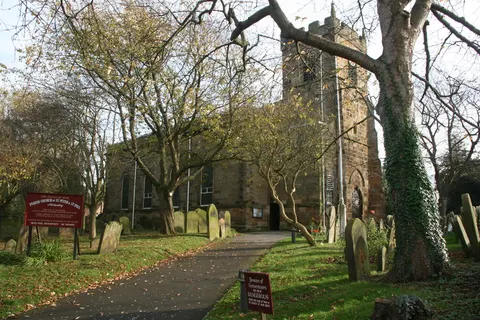
The nave of the parish church is rebuilt in a plain classical style; only the chancel and tower keep their 15th-century work.
Confidence: Likely
The market cross, which stood near the lane to the Packhorse Bridge on the old road to Kirby, Great Ayton and Guisborough, is taken down.
Confidence: Likely
A bridge for wheeled traffic is built over the Leven at the town crossing.
Confidence: Confirmed
The Peirson estates are broken up. The manorial rights and the manor house go to Thomas Wilkinson, who sells them before 1808 to the Rev. Henry Hildyard.
Confidence: Confirmed
John Preston founds a school in the town.
Confidence: Tradition / legend
According to an account printed in 1842, a cow-doctor named Wrightson takes a thatched cottage at the west end and, at the Trinity Fair of 1808, parades the market place in a red coat with his face painted vermilion. From then on he is the "Wise Man of Stokesley".
Confidence: Confirmed
The historian Graves describes the old toll-booth, where the lord of the manor held his courts, as "ancient and unsightly".
Confidence: Likely
Having outgrown Beck Side, the Wesleyans build a chapel and minister's house off Back Lane (now North Road) for £1,322, mostly borrowed.
Sources differ. The VCH says only that the Wesleyans had a chapel "since 1846 at least" and cites Bulmer for 1812.
Confidence: Likely
A John Wrightson of New Malton, cow doctor, enters a recognizance to appear at the Quarter Sessions. Whether he is the Wise Man is not proven.
Confidence: Likely
The Leven floods the town badly.
Confidence: Likely
Jane Pace, later Jane Henty, is born in Stokesley, the daughter of Captain Walter Pace of the East India Company. She will be among the first European women to settle permanently in what is now Victoria, Australia.
Sources differ. Sources differ on her birth year: 1816 and 1818 (both on Freotopia), 1817 (State Library Victoria; swvic.au) and 1812 (elsewhere on swvic.au).
Confidence: Tradition / legend
A coachman from Angrove is reported to have attempted to burgle a house in the area and, when discovered, to have shot himself, perhaps the grain of truth behind the Angrove Hall ghost story.
Confidence: Tradition / legend
Local histories give 1818 for the death of John Wrightson, said to have died in a post-chaise on the way to the House of Correction at Northallerton. No burial has been found, and the accounts of his death disagree.
Confidence: Likely
The Congregational chapel is built.
Sources differ. the VCH gives 1819; the CTLHS chronology gives 1809.
Confidence: Confirmed
A sundial is set on the south-west corner of the church nave with the motto "Hora pars vitae": the hour is a part of life.
Confidence: Likely
A large mill is erected in an unsuccessful attempt to bring the linen industry to Stokesley. It is demolished before 1849.
Sources differ. the VCH says the mill was demolished before 1849 and CTLHS says 1844, but the 1998 conservation assessment says the linen mill at New Mill worked 1823–1838 and survives as the Armstrong Richardson building.
Confidence: Confirmed
A Gothic revival school building goes up on College Square, the successor to John Preston's foundation of 1805.
Confidence: Confirmed
The Primitive Methodists build their first chapel on Back Lane for £264; it seats 200 and is not clear of debt until 1875.
Confidence: Confirmed
Jane Henty, née Pace, arrives at Portland Bay with her husband Stephen Henty. She is believed to be the first European woman to settle permanently in what became Victoria.
The Victorians did what Victorians did: they tidied up. Down came the butchers' shambles in the middle of the street, and up went a severe stone Town Hall. A railway arrived in 1857, an agricultural show two years later, a workhouse, a Mechanics' Institute and a run of new chapels. Floods still came, as they always had, and in 1866 the town was turned into a lake and the Show had to wait.
Confidence: Likely
Thomas Mease, a leading Methodist, goes bankrupt and his linen mill closes, causing severe unemployment; several families leave the town.
Confidence: Likely
The young radical printer George Markham Tweddell publishes the Cleveland News and Stokesley Reporter. He will later dismiss the Wise Man as "little better than a huge swindler".
Sources differ. Tweddell's death is given as 1901 by CTLHS and 1903 by other sources.
Confidence: Confirmed
The butchers' shambles that stood in the middle of the street, 24 shops in all, are demolished. The historian Ord had called them "odious" and "unsightly". Robert Hildyard is now lord of the manor.
Confidence: Confirmed
The Stokesley Union Workhouse is built.
Confidence: Likely
Stokesley opens a Mechanics' Institute. At the dinner the Stockton printer Henry Heavisides recalls the Wise Man as "as arrant an impostor" as ever lived.
Confidence: Confirmed
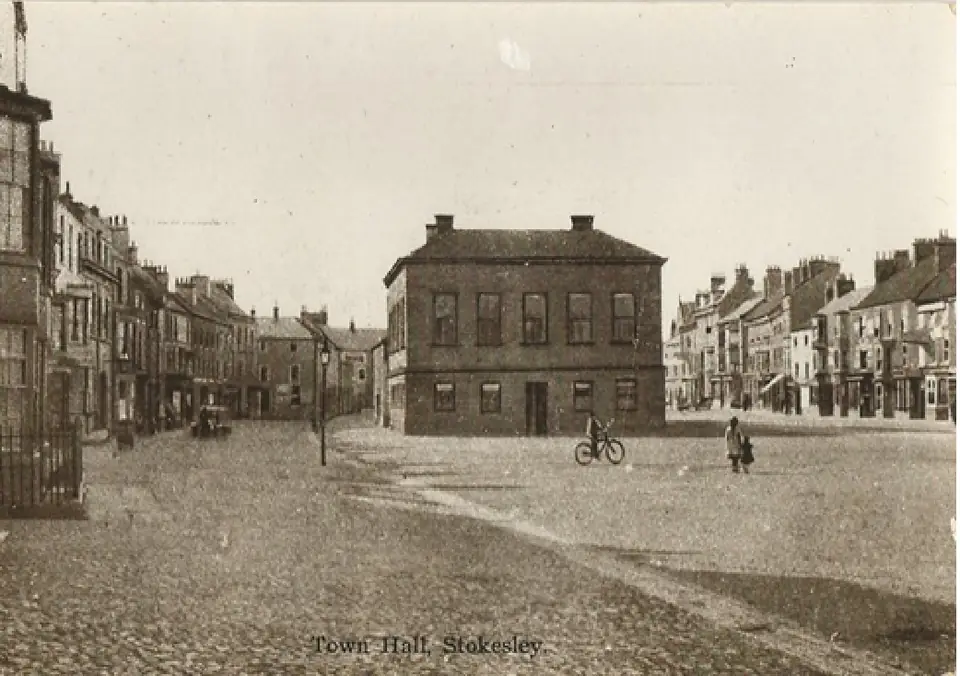
Robert Hildyard erects the Town Hall, replacing the old toll-booth.
Sources differ. Historic England dates the building only as "early-mid C19"; one CTLHS list gives 1854.
Confidence: Confirmed
Major Heneage Wynne, who has just inherited the manor from his uncle Robert Hildyard, is killed at Inkerman in the Crimea a few days after his uncle's death.
Confidence: Confirmed
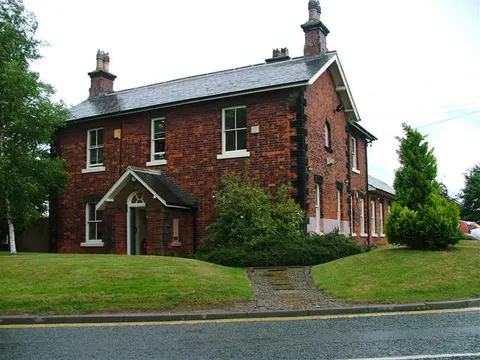
The North Yorkshire & Cleveland Railway opens to Stokesley; the line is extended to Ingleby on 1 February 1858.
Sources differ. Some sources give 2 March 1857.
Confidence: Confirmed
At a meeting in the Golden Lion, the Stokesley Agricultural Society is formed.
Confidence: Likely
The last thatched roofs on West Row are replaced, a Roman Catholic mission opens in a room in the Angel Inn yard, and Miss Hildyard plants chestnut trees on the north bank of the Leven.
Confidence: Likely
The Group's diary of the 1860s records a human skeleton found at Parish Creyke farm, in what was described as the heating chamber of a Roman villa.
Sources differ. Not yet checked against the Historic Environment Record; the "Roman villa" identification is the 1860s description.
Confidence: Confirmed
Charles Wynne, lord of the manor, takes the additional surname Finch. The same year the town celebrates the Prince of Wales's wedding with a children's tea and a ball in the Town Hall.
Confidence: Confirmed
Floods put Stokesley under water and the Show is postponed. A year later the Darlington & Stockton Times remembers the town being "converted into a lake".
Confidence: Confirmed
The Roman Catholic chapel of St Joseph is built north of the town on the road to Stockton.
Confidence: Confirmed
The old seating of the church nave is replaced with benches and a new font is installed.
Confidence: Likely
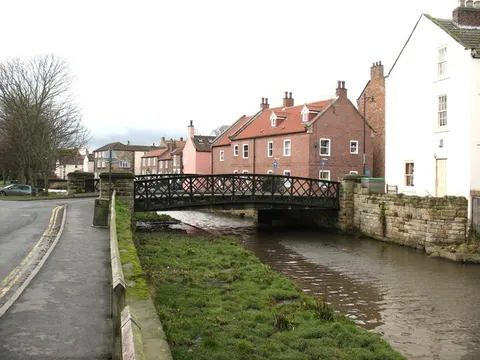
An iron footbridge is put across the Leven.
Confidence: Confirmed
The Wesleyans open their new chapel on the High Street, built on the site of the Black Swan coaching inn, which William Mewburn bought quietly on their behalf. The same year a clock is given to the parish church for Queen Victoria's Jubilee.
Confidence: Confirmed
Robert Hymers leaves £1,000 in his will for charitable purposes in the parish.
Two wars reach the town in different ways: the first as a hospital in the Manor House, where local women nursed some eight hundred men; the second as a training aircraft falling out of the night sky near Newby. Afterwards come the losses that change a skyline. The trains stop, Stone Hall falls down, the old mill is pulled down, and the river is finally given a channel of its own. The town becomes a conservation area, and its history group starts writing things down.
Confidence: Confirmed
The Primitive Methodists move to a new chapel on High Green (College Square), built for £832.
Confidence: Likely
The Show's Jubilee Cup is won, by the Show's own account, by a pig from the workhouse.
Confidence: Confirmed
The Manor House opens as a 60-bed Red Cross hospital, staffed by the local Voluntary Aid Detachment under Mrs Anne Gjers. The first patients are 14 Belgian soldiers.
Confidence: Confirmed
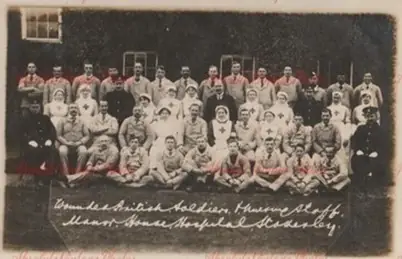
A postcard photograph is taken: 'Wounded British Soldiers and Nursing Staff, Manor House Hospital, Stokesley'.
Confidence: Confirmed
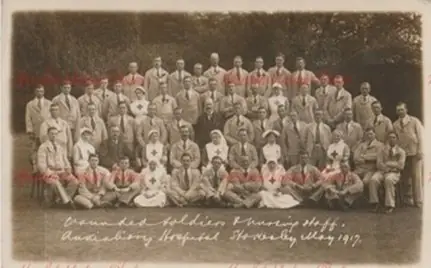
Wounded British soldiers and nursing staff are photographed at the Auxiliary Hospital in the Manor House.
Confidence: Likely
The hospital closes after treating 801 men. The Gjers family afterwards buy the Manor House.
Sources differ. Sources give 1919 or 1920 for the purchase.
Confidence: Likely
The memorial to the fallen of 1914–18 is unveiled and dedicated.
Confidence: Confirmed
The VCH account of Stokesley parish is published, describing 'a market town consisting of one wide street… on the north bank of the Leven'.
Confidence: Confirmed
Heavy rain floods the town.
Confidence: Likely
Trees are planted on South Levenside in memory of Jane Pace.
Confidence: Confirmed
A Lockheed Hudson of No. 6 (Coastal) Operational Training Unit stalls after taking off from Thornaby and crashes near Newsham Hall, between Middlesbrough and Stokesley. All five airmen are killed.
Confidence: Likely
Fiddler's Mill, probably on the site of the mill recorded in Domesday, grinds for the last time.
Confidence: Confirmed
Passenger services through Stokesley end. Goods trains continue for another decade.
Confidence: Confirmed
The railway through Stokesley closes completely.
Confidence: Confirmed
After a century of weekday Shows, members vote to hold it on a Saturday; the first Saturday Show follows in 1968.
Confidence: Likely
Stokesley Rural District Council demolishes the cottage and shop next to Stone Hall to build bungalows in Stone Close, and sells the Hall on.
Confidence: Confirmed
The centre of Stokesley is designated a conservation area (amended in 1988).
Confidence: Likely
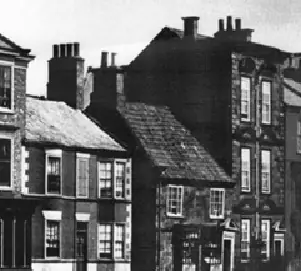
An anonymous donation lets the North East Civic Trust buy Stone Hall, and renovation begins.
Confidence: Likely
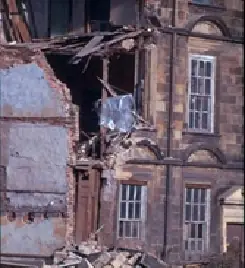
Workmen notice movement; two days later a corner collapses into the street. Underpinning is too costly, and the Hall is demolished.
Sources differ. Sources disagree on the year: the Group's Stone Hall page says 1975, the 1998 conservation assessment and CTLHS say 1973, and the Group's own Google Site timeline says 1970.
Confidence: Likely
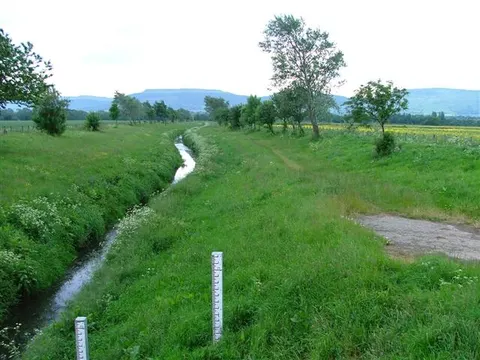
A severe flood leads to a diversion channel that takes high water around the town, completed in the following years.
Confidence: Confirmed
The Group publishes "Historical Glimpses of Stoxley".
Confidence: Tradition / legend
The story circulates in town; the Evening Gazette reports 'Inn where Angels fear to tread'. The same year the Group publishes 'A Walk around the Town no.1'.
Confidence: Confirmed
The old corn mill by the town bridge is pulled down.
Sources differ. The Group's Google Site timeline has the confusing entry "1983 – Fiddler's Mill demolished 1989".
Confidence: Likely
Marlow Foods begins making the meat-free food Quorn, with processing at Stokesley.
Confidence: Likely
The Stokesley Society sets the old mill wheel beside the town bridge as a memorial to the mill.
Sources differ. The Group's Google Site timeline says the wheel was unveiled in 1992.
Confidence: Confirmed
The Group publishes "Along Levenside: a 3rd walk around Stokesley".
Confidence: Confirmed
Hambleton District Council publishes its Conservation Area Assessment, quoting Pevsner's view of Stokesley as one of the most attractive towns in the North Riding.
The recent past is easier to date and harder to see clearly. Volunteers save the library. A pandemic cancels the Show. The town argues, cheerfully and at length, about whether a footbridge should have handrails. And at the Spread Eagle, if you believe the CCTV, a pint glass moves of its own accord. Every entry here has a source; whether you believe the last one is up to you.
Confidence: Confirmed
The Group publishes the town directories from 1793 to 1901, and a book on the Cleveland Repertory & Stokesley Advertiser.
Confidence: Confirmed
Tim Allison's Stokesley Ale Trail is published. It tells the story of the town's inns and alehouses.
Confidence: Confirmed
Run by volunteers since 1 April, the Globe community library is formally opened by the novelist Philippa Gregory. It now houses the Group's research files.
Confidence: Confirmed
The Covid-19 pandemic cancels the Show, the first lost years since the Second World War.
Sources differ. One Show news page says 2019 and 2020; the Show's history page says 2020 and 2021.
Confidence: Confirmed
Residents petition against replacing the Golden Lion plank bridge with a steel footbridge with handrails, approved by Hambleton's planners in December 2021.
Confidence: Confirmed
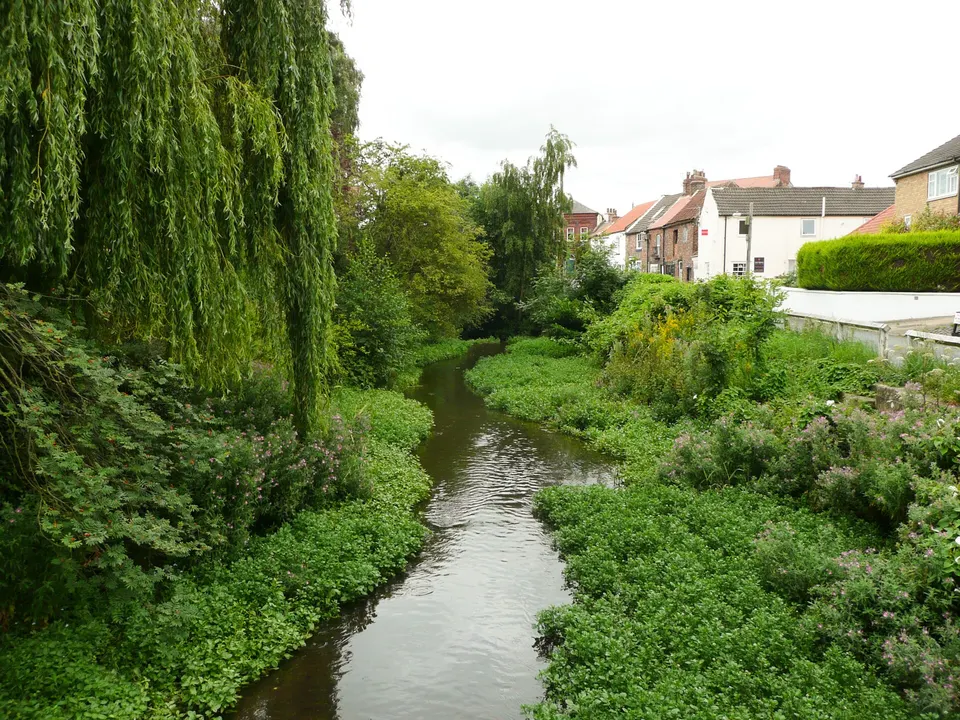
The Environment Agency's new defences are opened: flow-control structures upstream and downstream, a re-profiled diversion channel, and river restoration on Levenside. They protect 509 homes and businesses.
Confidence: Tradition / legend
CCTV in the pub records a glass apparently moving by itself one quiet Sunday night.
Confidence: Confirmed
Group members publish books on Stokesley Racecourse, Stokesley Football (the early years), and Climate or Weather: Stokesley Survives.
About this timeline. Events come from the Group's own pages and from published sources including the Victoria County History, Open Domesday, Historic England, Hambleton District Council, the Cleveland & Teesside Local History Society and contemporary newspapers. Text is summarised in our own words. Confirmed means an authoritative record or two independent sources; likely means one reputable source; tradition / legend means folklore that cannot be proved. Where sources disagree, the card says so.