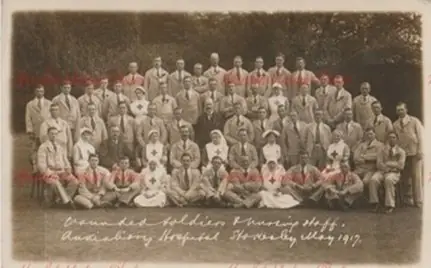
Eight Hundred Men at the Manor House
During the First World War the Manor House became a 60-bed Red Cross hospital, run by Anne Gjers and staffed by local women volunteers.
Confidence: Confirmed
Stories, places, people and pictures from a North Yorkshire market town, researched and shared by the Stokesley Local History Group.
The long view
How a river crossing at the foot of the Cleveland Hills became a market town, and why so much of it is still here.
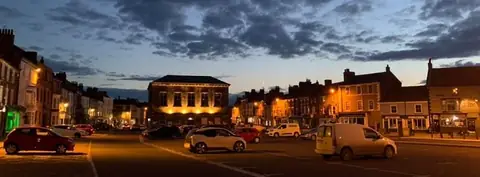
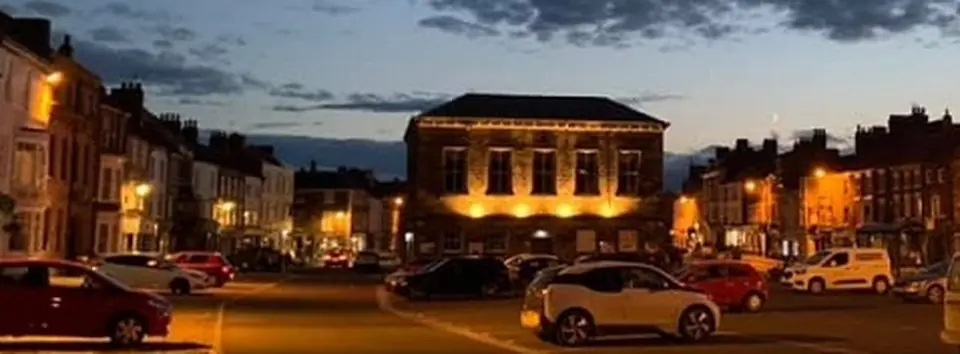
Come into Stokesley from the west and the town opens in front of you like a held breath let go. West Green first, wide and grassy; then the street narrows by the old bank at the corner of Bridge Road; then it widens again into the Market Place, the Town Hall standing in the middle of it like a man who has stopped to think, and beyond it the Plain, the Manor House behind its wall, and the church. The Victoria County History, writing in 1923, described the whole thing in a sentence: a market town of one wide street on the north bank of the Leven, whose general aspect had probably not changed for centuries. It is still a fair description.
The town is old. When the Domesday commissioners came in 1086 they found a priest, a church and a mill here, and an estate worth a third of what it had been twenty years before, in the days of a man called Hawart. Within a generation it belonged to the Balliols, a family who would one day give Scotland a king. In 1223 or 1224 Henry III granted a yearly fair, and about 1280 one of the lords, Hugh de Eure, claimed that there had been a market here since the Conquest. Nobody, it seems, argued with him.
"The roads of Cleveland," the County History observed, "all meet at Stokesley." That is the secret of the place. Farmers came in on market day, the street filled with inns, and the inns were where business was done: the Stokesley Show was founded in one of them, the Golden Lion, in 1859. In the middle of the street stood the butchers' shambles, twenty-four shops in all, until the Victorians, who disliked them, pulled them down in 1846 and put up the Town Hall a few years later.
Stokesley largely escaped the nineteenth century's industry, and that is why it still looks like itself.
What did not happen matters as much as what did. A linen mill was tried in the 1820s and failed. The railway came in 1857 but stopped a mile short of the centre, and the district council's planners concluded in 1998 that it had made little difference to how the town grew. Stokesley largely escaped the industry that remade so much of the North-East, and kept, in the planners' phrase, the look of a Georgian town with a Victorian veneer. It was made a conservation area in 1971.
The history of a small town is uneven. Lords of the manor appear in charters and court rolls for eight hundred years; ordinary people appear mostly when something goes wrong. We know about the boys who ransacked the Catholic chapel in 1746, the floods that turned the town into a lake in 1866, the women who nursed 801 soldiers in the Manor House between 1914 and 1919. We know, because people never stop telling it, about a wise man in a red coat who may or may not have had second sight. And we know about the losses: Stone Hall, which fell down in the 1970s; Fiddler's Mill, demolished in 1983; the trains, gone by 1965.
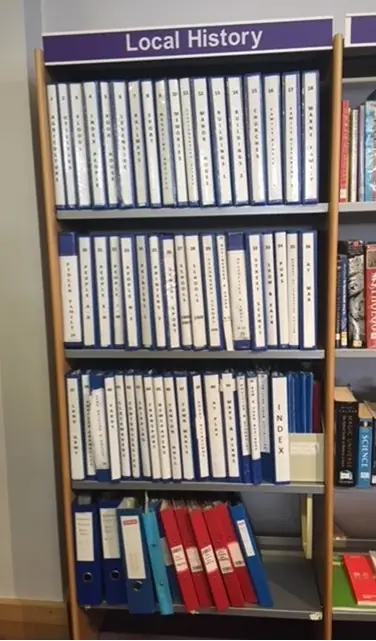
That is where the Stokesley Local History Group comes in. Since the early 1980s its members have been writing things down: the directories, the pubs, the walks along Levenside, the floods, the racecourse. Their files fill a shelf in the community library. This site is an attempt to bring that work out into the street, and to say, as honestly as we can, how sure we are of each thing we tell you. Some of it is certain. Some of it is likely. And some of it is legend, and we will always say so.
Sources: Victoria County History, North Riding vol. 2 (1923); Open Domesday; Hambleton DC Conservation Area Assessment (1998); Stokesley Show history; Disused Stations; and the Group's own pages. Full details on each story and in the timeline.
 Now
Now 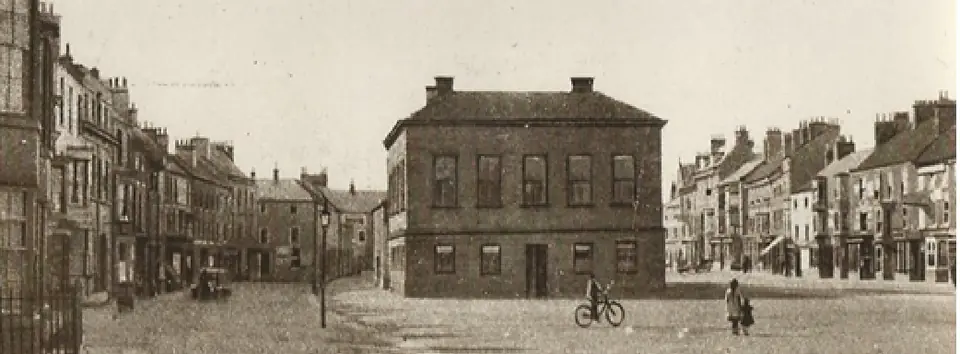 Then
Then During the First World War the Manor House became a 60-bed Red Cross hospital, run by Anne Gjers and staffed by local women volunteers.
Confidence: Confirmed
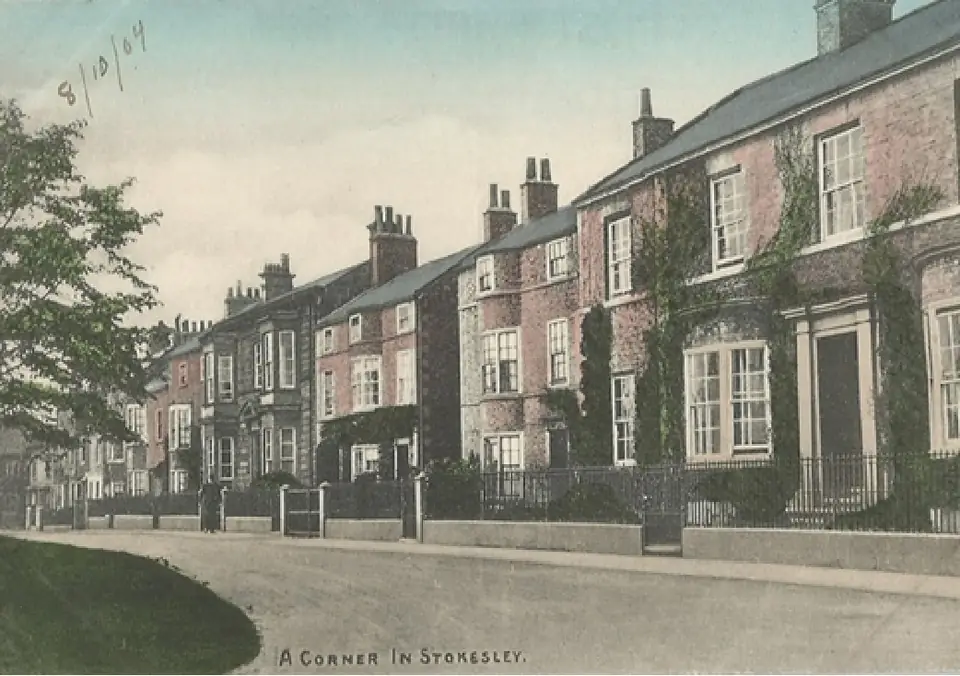
John Wrightson, the 'Wise Man of Stokesley', sold cures and second sight in the early 1800s. A real man wrapped in legend.
Confidence: Mixed
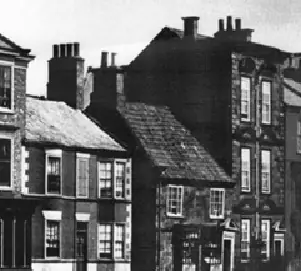
The oldest and most prominent building on the High Street was saved from demolition, bought by a civic trust and then lost when a corner collapsed into the street.
Confidence: Likely
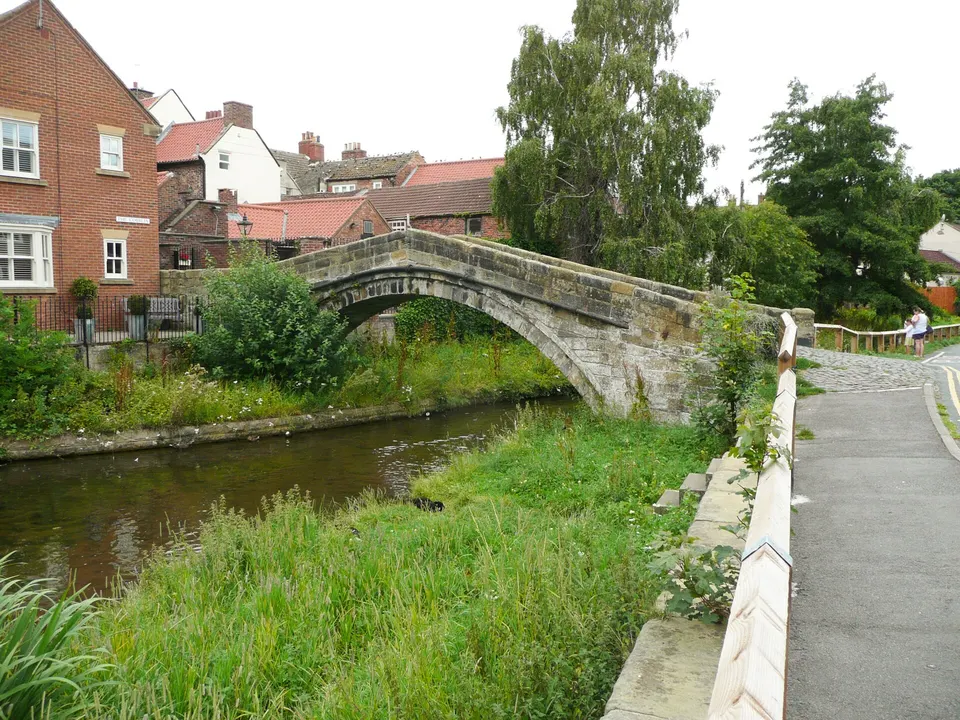
The bridges and the mill on the Leven, from the Domesday mill to the wheel by the town bridge.
Confidence: Mixed
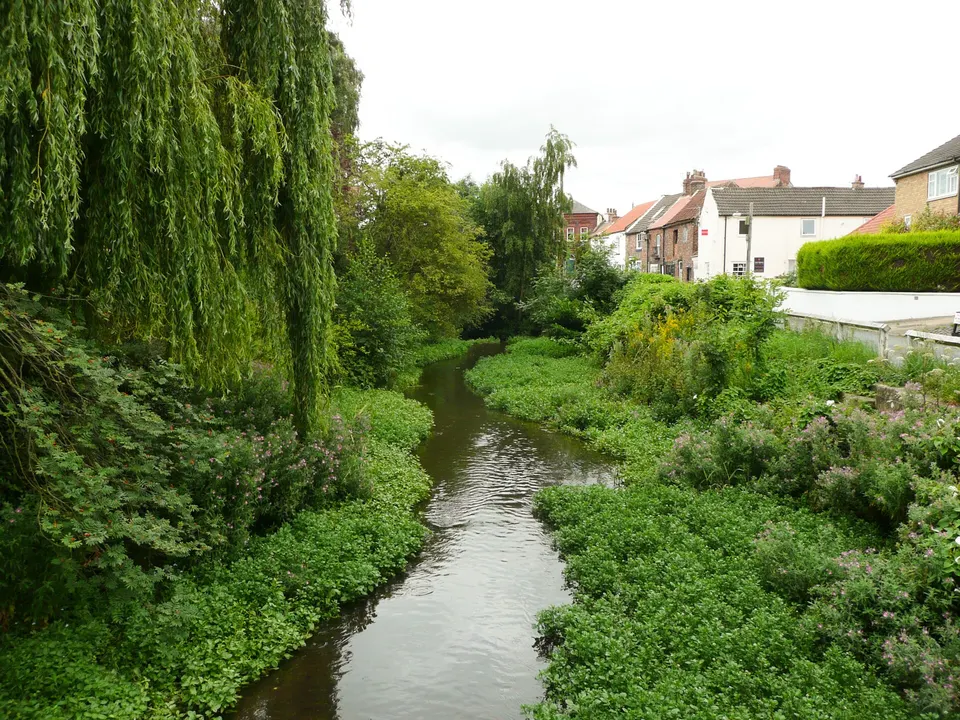
Jane Henty, née Pace: from Stokesley, by local tradition, to Portland Bay in 1836.
Confidence: Mixed
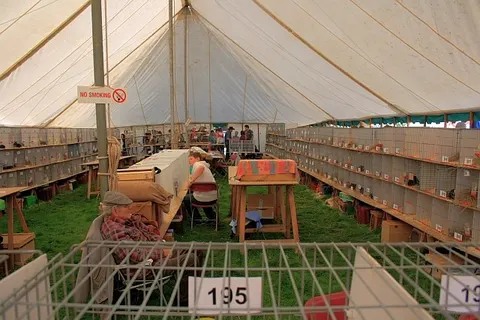
The Stokesley Agricultural Show, founded at the Golden Lion in 1859, and the stories it has gathered since.
Confidence: Confirmed
All the Group's materials are stored at the Stokesley Globe Public Library: 49 research files covering everything from agriculture and floods to clockmakers, pubs and the Land Army. Anyone can view them; ask the Library Assistant if you'd like photocopies.